AI is everywhere and lots of people are using it, but we also need to talk about setting boundaries. Numerous studies have shown how AI is impacting our brains, yet only few people are talking about implementing AI literacy in their everyday lives.
THE BIG PICTURE — LET’S TALK ABOUT IMPACT:
As AI continues to evolve, the more sophisticated it becomes and has disrupted our society. In fact, today, OpenAI is offering its Enterprise package to the US government for $1
And that — is concerning. If the government has started using AI without boundaries and structure, what will happen? Crash course about AI: AI learns through mountains of data. If AI is being used as an institutional tool, what will happen to our privacy? These questions are on a macro level; however, you still have a role in setting your boundaries. One day, AI will be so ubiquitous, that it will be impossible not to encounter it. So, where do you draw your line?
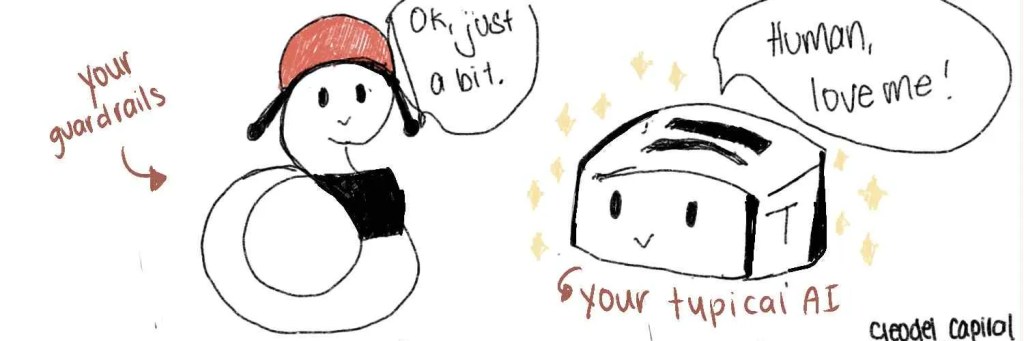
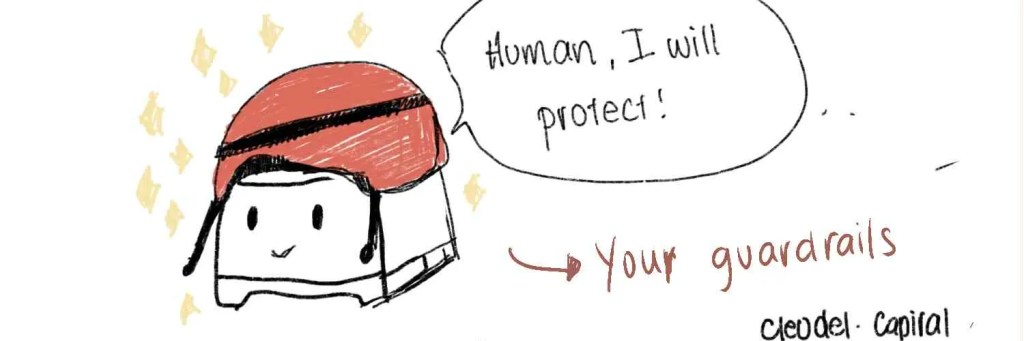
Without proper guardrails against AI usage, it dulls our cognitive thinking, develop unhealthy attachment towards AI, and withdraw from human relationships. Currently, we are already seeing its impacts:
- Chatbots like ChatGPT are being used as substitute for personal human relationships and therapy
- Usage of ChatGPT dulls our critical thinking, encourages impatience, and reduces the ability to read long posts
Humans are already letting the tool lead and feed the system private data, which are used to train future models. In fact, in 2017, after an AI was trained on the massive email dataset, which contained private information from the Enron company, the AI managed to memorized people’s social security numbers.
So: How do we protect ourselves if chatbots like Co-pilot are being integrated in both our workspaces and personal lives?
Below is my own personal workflow and framework. I call it the Cleo Credo (you can tell naming isn’t my strongest). Personally, I’ve used ChatGPT for a personal case study. As a tech nerd, I’m quite curious about its limitations, adaptability, and capabilities. But before I started interacting with ChatGPT, I started setting ground rules for myself:
- I will never use AI for anything creative: My imperfect voice is my own, so are my ideas. These are my thoughts; they’re mine alone. I respect artists and value the artistic process.
- I will only use AI after I’ve exhausted all learning opportunities: I respect the process of solving things. I am smart enough to figure it out.
- AI isn’t my friend, therapist or doctor: It lacks nuances and context; therefore, I maintain a respectable distance. I will only use it for minor rants to save my sanity. Moreover, AI doesn’t have any medical license or fiduciary responsibility towards its users. It is not there to protect you.
Once I started setting my personal credo, I outlined how I will interact with it.
- Respect the system math: AI is system math, probability trees, pattern mimicking, and scaffolding. Therefore, the responses that AI provides are in-line with the pattern that I have provided, creating an echo chamber. It is very easy to be stuck in an echo chamber, especially as ChatGPT is designed to drive system engagement for data.
- Cross-verify its answers: AI is really good at echoing the user. AI lacks context, prone to hallucination, and can’t be held accountable. Therefore, I will be the one paying the consequences.
- Keep it private: Treat the chatspace as a public space. Recently, it has been found that those who shared their chats with ChatGPT were found to become public information. Anything that you said can and may be used against you.
With these things, it created a compass. Below are additional things that I do to protect myself in this chaotic technological landscape:
- Educating myself: The more I learn about AI, the more I understand it. AI isn’t a superpower: It is simply a very smart and computerized worm, but still a baby worm who can’t understand how humans function. See? It makes them less glamorous. I recommend reading Janelle Shane book — You look like a thing and I love you — for basic understanding.
- Practicing slow living. In today’s world where everything is convenient, and there is that expectation of quick answers — indulging in mindfulness will steady your thoghts and give a clearer picture. Embrace the slowness of life, and your mind will thank you.
So, my dear reader, here is my challenge to you. Think about your own credo — why use AI and how can you use it responsibly? It doesn’t have to be detailed like mine, but at least answering these things — you can start developing your own credo.
In the next post, I do want to touch upon how AI works and provide my insights. Or maybe we do a complete 180, and I talk about the implications of using AI as a therapist. Who knows!

 The Ouroboros Archive
Leave a comment